
Starting is easy. The real trouble comes around day eight. Most self-improvement attempts fizzle out not from a lack of initial motivation, but from a total absence of structural support to maintain rhythm. This ranking focuses purely on that endurance game. We evaluated each platform on a single criterion: its engineered ability to prevent user drop-off and foster regular, sustained learning engagement beyond the first burst of enthusiasm.
What Supports Long-Term Learning Consistency
Sticking with a program requires more than willpower. It needs built-in mechanics. Consistency arises from deliberate design with specific triggers, feedback systems, and a palpable sense of forward motion. We analyzed which platforms actively construct these user-retention architectures. Our assessment focused on several practical factors:
- Daily prompts and low-effort entry points;
- Visual progress tracking and reward systems;
- Interactive application over passive consumption;
- Structured pathways that eliminate choice paralysis.
Platforms integrating more of these features rank higher. They convert the vague aim of “learning more” into a managed process with a lower daily cognitive tax, making long-term participation more probable.
1. RiseGuide
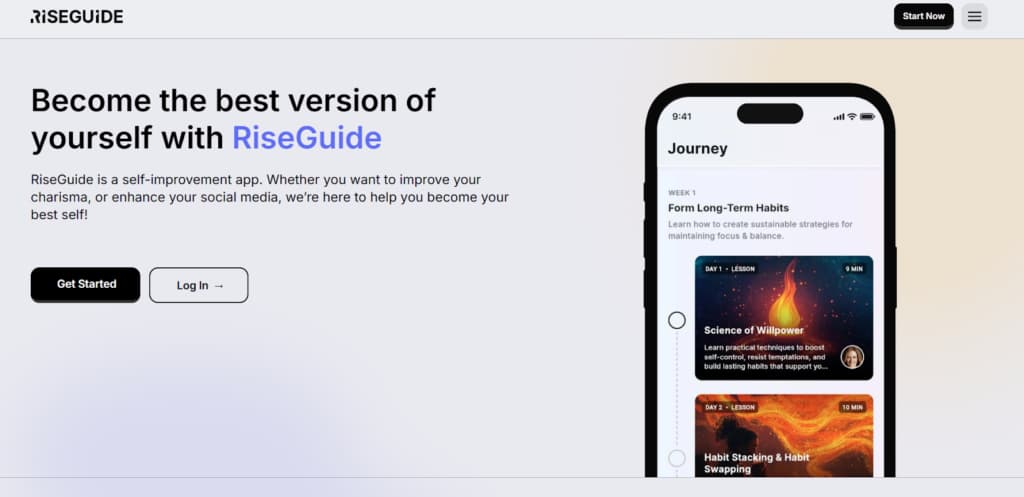
RiseGuide employs a micro-learning model centered on daily, bite-sized lessons for skills like communication and critical thinking. The entire philosophy banks on regularity, not intensity. It operates on the principle of minimal daily commitment, creating a system so frictionless that maintaining a streak becomes easier than breaking it. This design sidesteps the need for motivational peaks.
How RiseGuide Maintains Learning Consistency
The platform’s architecture embeds consistency directly into the user experience. It uses a combination of behavioral nudges and structured content flow. Key mechanics include:
- A non-negotiable daily lesson serving as a primary habit trigger;
- Pre-defined learning paths that remove the “what next” decision fatigue;
- Interactive exercises and quizzes that mandate active engagement;
- The SEEK tool for instant knowledge gratification, curbing distraction;
- Visual streak counters and trackers that leverage completion momentum.
This integrated system cultivates a long-term rhythm by making the default action small and achievable. The design pulls the user forward. A fair assessment notes its limitations: the onus to open the app remains, progress is incremental, and some content requires personal adaptation as full customization isn’t always present.
2. Mindvalley
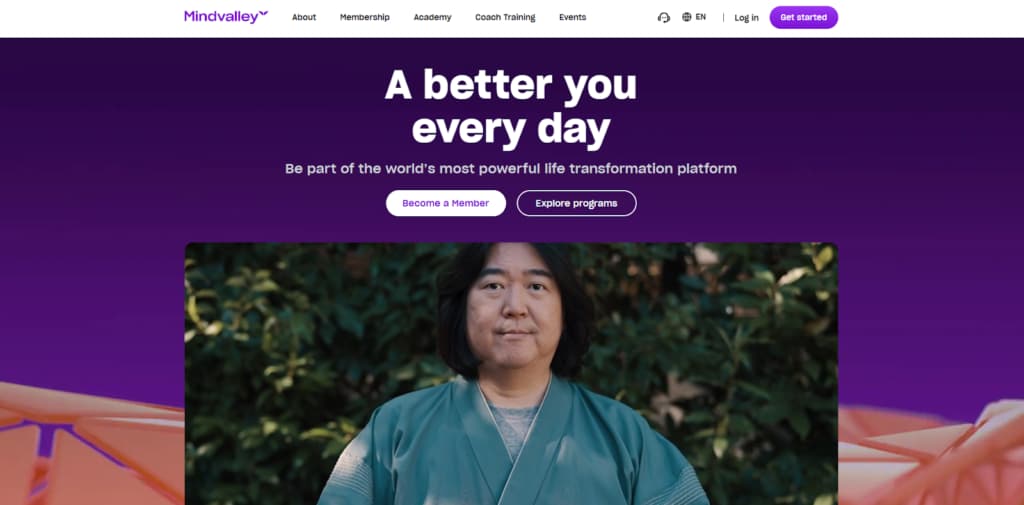
Mindvalley delivers personal growth through transformational programs. These are structured courses with a distinct beginning and end, often wrapped in high-production storytelling and communal energy. The focus is on immersive, themed journeys.
How Mindvalley Tries to Sustain Engagement
The platform’s strategy relies on emotional investment and social scaffolding. It attempts to lock in engagement through programmatic structure and community. Its methods involve:
- Sequential program chapters that provide a clear narrative progression;
- Live events and an active community forum for external accountability;
- Aspirational content framing that taps into a user’s desire for change.
Engagement here is cyclical and wave-like. Users commit to a 30 or 60-day program, driven by the group momentum and a compelling vision. Consistency is strong for that period. However, this model depends on the user repeatedly finding and starting new programs to maintain the rhythm, as the habit is tied to the program cycle, not a daily life practice.
3. MasterClass
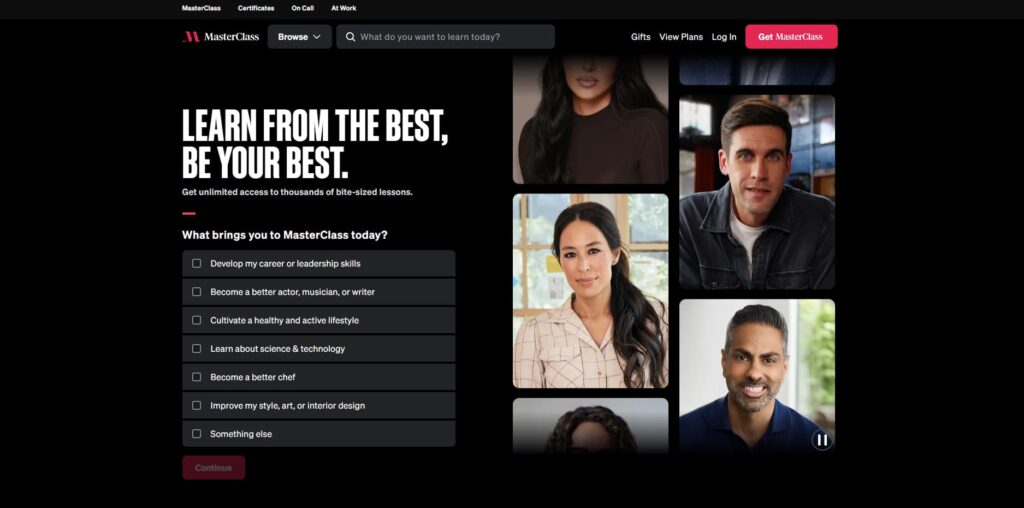
MasterClass offers impeccably produced lessons from world-renowned experts. The value proposition is inspiration, insight, and unparalleled access to masters of their crafts. The experience is akin to a premium documentary series.
Where MasterClass Keeps You Interested
The platform excels in production and curation. Its strengths are in capturing and holding attention through quality and prestige.
Its primary engagement drivers are:
- Celebrity instructors who provide unique authority and perspective;
- Cinematic production quality that makes viewing intrinsically enjoyable;
- A broad, eclectic catalog that encourages thematic exploration.
While it sustains interest, it does not build a habit. The platform lacks any architecture for daily practice or routine. Consumption is entirely on-demand and based on fleeting interest. For establishing a consistent learning rhythm, it provides no tools, reminders, or structural incentives.
4. Studio
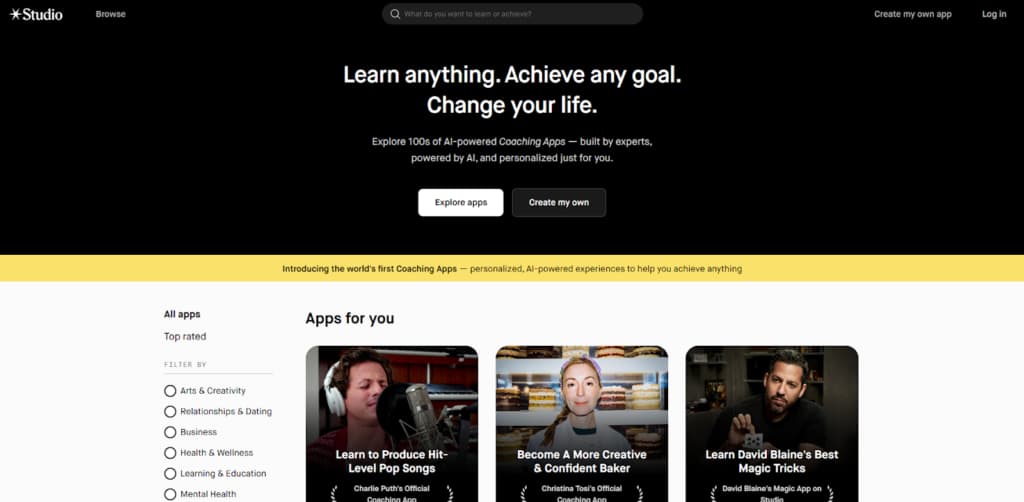
Studio focuses on creative skill acquisition through project-based video tutorials. Users learn by following an instructor to complete a specific creative output, like a digital illustration or a musical composition. The learning is hands-on and output-oriented.
How Studio Engages During Projects
Engagement is high but intrinsically linked to project completion. The platform is designed for focused sprints. Its engagement mechanics are:
- Tangible project goals that provide immediate purpose and direction;
- Step-by-step video guidance that facilitates real-time doing;
- A project gallery that offers social proof and completion satisfaction.
A consistent rhythm only exists within the confines of a single project. This leads to bursts of intense activity followed by natural lulls. The platform does not engineer daily micro-habits; it facilitates deep dives. The learning pattern is intermittent, not sustained.
5. Blinkist
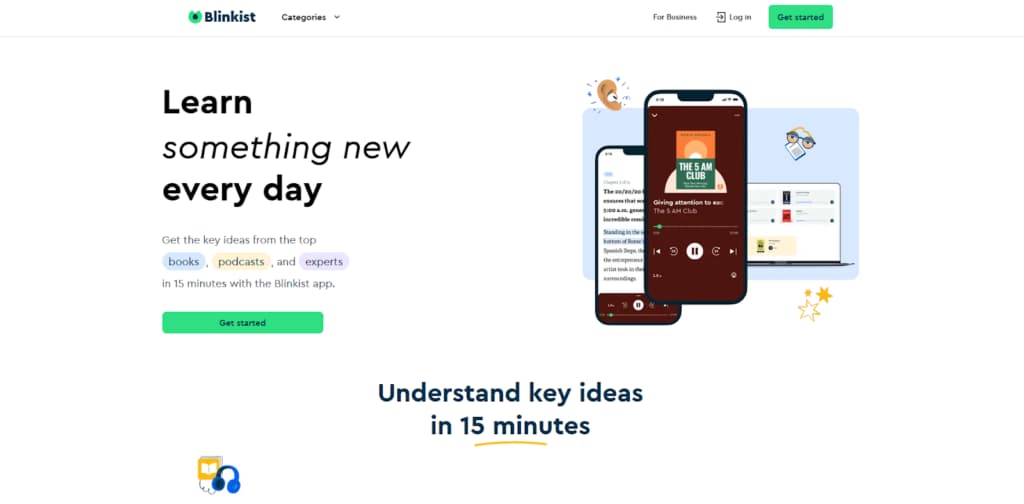
Blinkist condenses non-fiction books into 15-minute text or audio summaries. Its design prioritizes extreme convenience and low time investment, making knowledge consumption possible in any short downtime.
What Makes Blinkist Frictionless
The platform removes all traditional barriers to content consumption. This is its main engagement strategy. Its design principles include:
- Minimal time commitment per unit of content;
- Audio-first formatting for passive, multitasking consumption;
- A vast, searchable library that caters to immediate curiosity.
This frictionless model is also its weakness for building consistency. Because using the app requires almost no effort, stopping its use requires even less. There is no sticky habit loop or compelling daily trigger. It perfectly fits into an existing routine but fails to create a new, robust one.
6. Headway
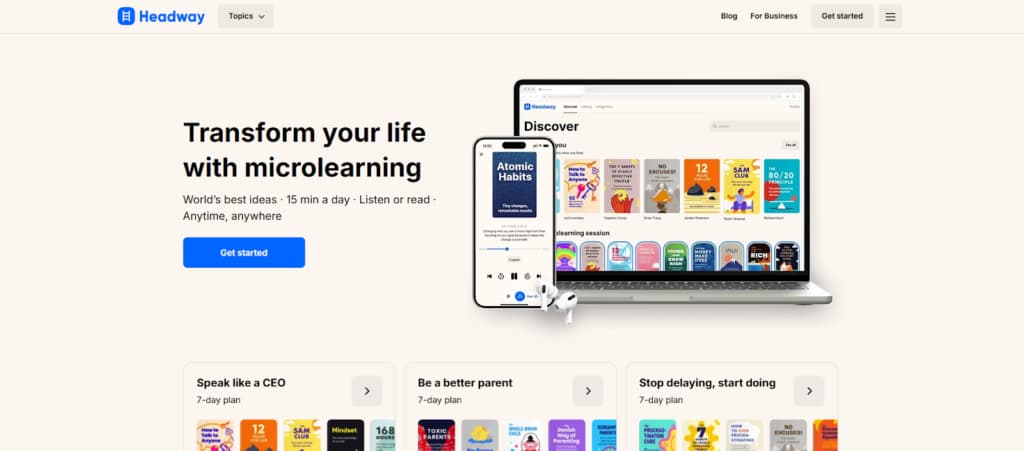
Headway is a micro-learning app focused on book summaries, daily insights, and challenges. It aims to insert itself into daily life through very small, gamified interactions.
How Headway Encourages Short-Term Consistency
The platform employs basic behavioral design techniques to encourage regular opening of the app. Its tactics involve:
- Daily reminder notifications and prompt-based check-ins;
- Short-term challenges and visual streak counters;
- Integrated flashcards and micro-quizzes for minimal interaction.
These are effective for initial habit formation, often working for several weeks. However, the long-term system feels superficial. The primary activity remains passive consumption of summaries, and the interactive elements are lightweight. The architecture for profound, lasting skill development through consistent practice is not its focus.
7. Deepstash
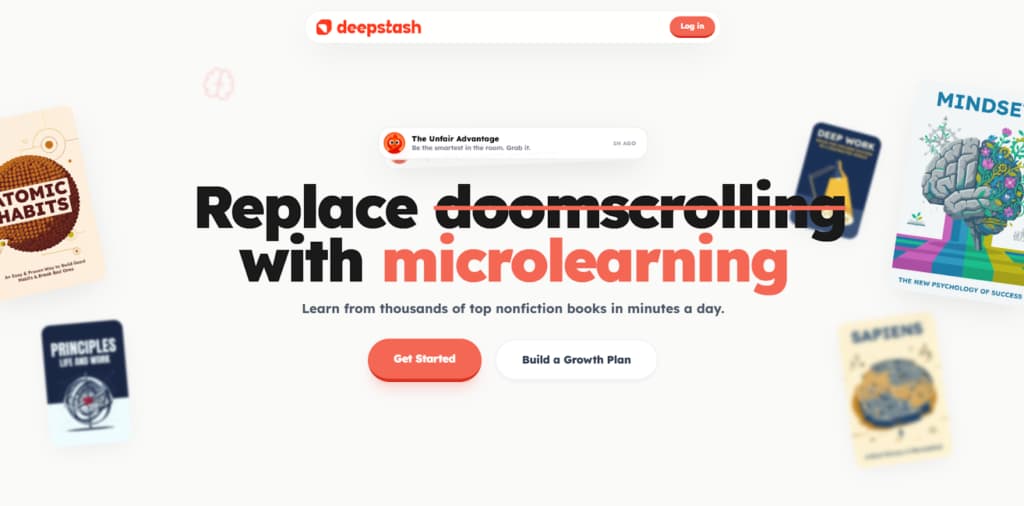
Deepstash presents key ideas from books and articles on scrollable, visual cards. Its interface mimics a social media feed, built for quick, scrolling consumption of conceptual insights.
Where Deepstash Fits Into a Learning Routine
It functions as a supplemental knowledge source. The platform is designed for grazing, not for structured study. Its role is defined by:
- Skimmable idea cards consumable in under a minute;
- An infinite feed format that encourages casual browsing;
- Broad topic curation that serves spontaneous curiosity.
This model possesses no routine architecture. It is a destination for distraction or filler moments, not a scheduled practice. It does not establish a time, a ritual, or a required action for learning. It is a digital snack bar, not a meal plan.
8. Imprint
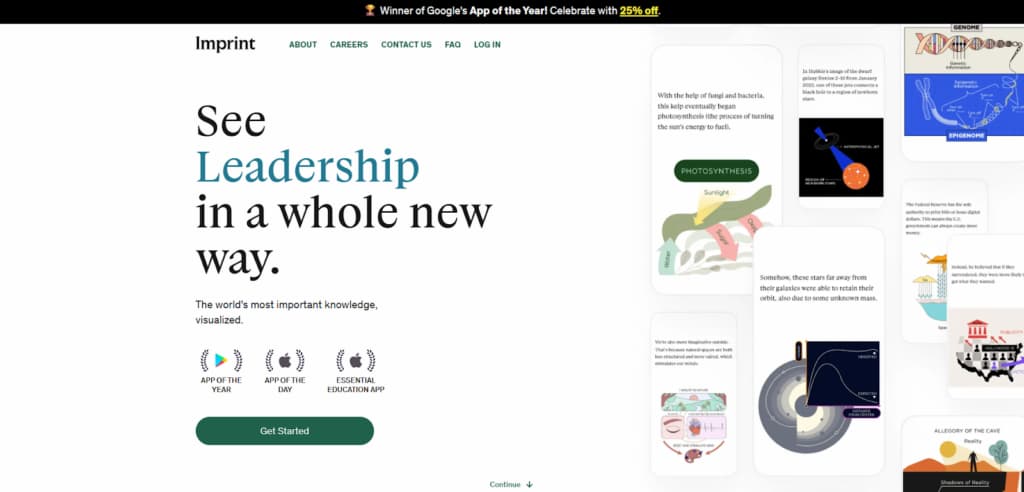
Imprint is a visual microlearning app built around short, daily lessons. The focus is on psychology, habits, productivity, and soft skills. Instead of long-form courses, it delivers condensed, structured insights designed for quick consumption and reflection. The experience feels closer to guided daily learning than formal study.
How Imprint Supports Learning Consistency
Imprint encourages regular engagement through light, low-friction interactions. Its design lowers the barrier to daily use and frames learning as a brief, repeatable ritual. Key mechanics include:
- Visually structured bite-sized lessons optimized for short sessions;
- Topic paths that group ideas into simple thematic sequences;
- Daily reminders and prompts that encourage returning to the app;
- Swipe-based, interactive formats that keep attention active;
- Progress indicators that reinforce a sense of completion.
This approach helps users stay loosely consistent, especially in the early stages of habit formation. However, the system is built around insight consumption more than repeated skill practice. Engagement can remain surface-level, and long-term growth depends on how actively users apply the ideas outside the app.
Conclusion: Consistency Beats Intensity in Skill Growth
Sustainable growth is a function of systems, not sparks. Intense learning bursts are spectacular but unsustainable. The real differentiator among platforms is their capacity to engineer the unglamorous habit of daily return. The highest-ranked platforms here are those that automate consistency, reducing reliance on the user’s unreliable reserve of daily motivation.